
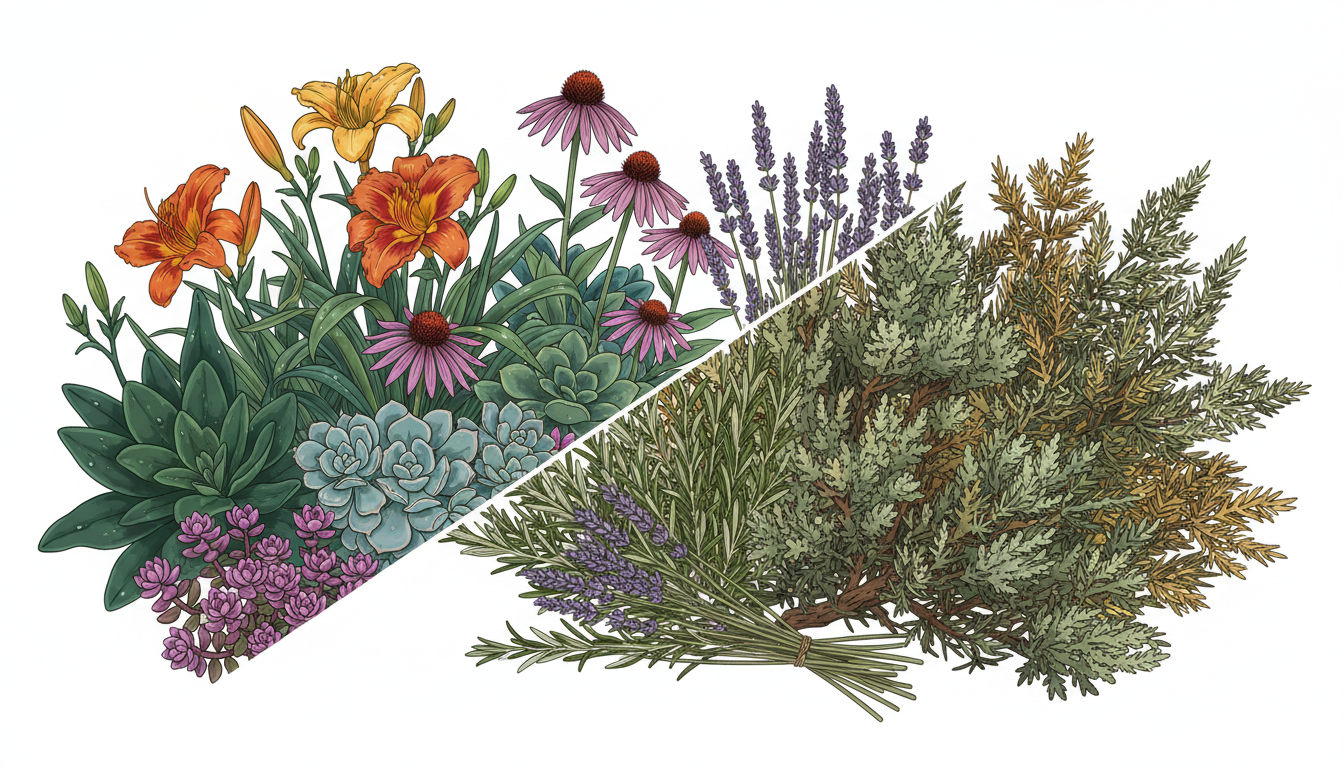
As wildfires intensify across many regions, homeowners are paying more attention to the role their garden plants may play during a fire event. Some flowers remain cool and moist under high heat, resisting ignition, while others act as fuel—burning quickly, producing embers, or spreading flames through resinous oils. Understanding the biology behind flammability is one of the most powerful ways to create a safer, firewise landscape. This guide breaks down the scientific traits that make a flower fire-resistant and highlights which popular blooms could put your home at risk.
The Science of Fire-Resistant Flowers
Fire-resistant does not mean fireproof. Instead, it describes plants that are harder to ignite, burn slowly, or contribute little heat when exposed to flames or embers. Several measurable biological traits determine how a plant behaves in a fire.
1. High Water Content: The Most Important Factor
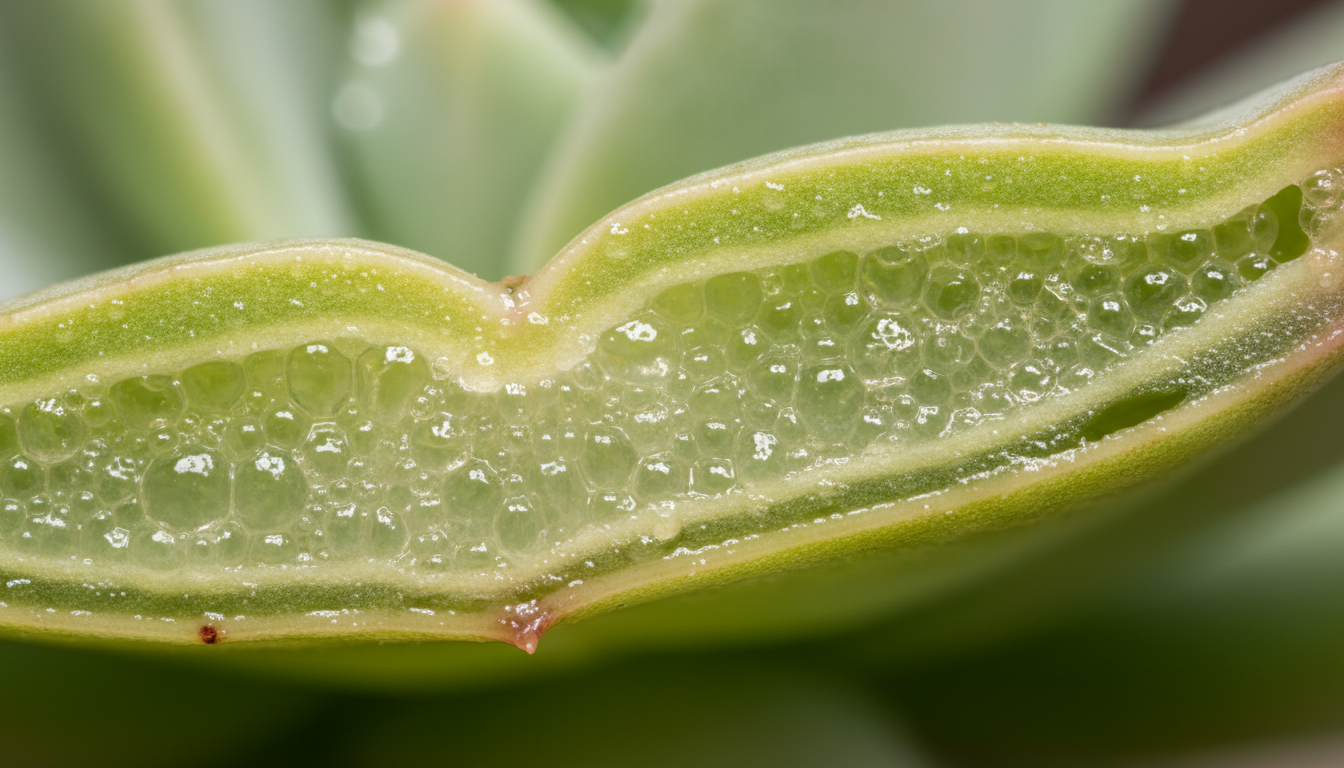
Water is the single greatest fire suppressant in nature. Plants with thick, moisture-laden leaves stay cooler under radiant heat and resist ignition far longer than dry or thin-leafed plants.
Why Moisture Matters
- Water must evaporate before the plant tissue can burn
- High-sap tissues slow the ignition process
- Succulent leaves create natural heat barriers
- Moist plants produce less smoke and fewer embers
Plants with consistently high internal moisture include:
- Succulents (such as Delosperma, Aloe, Sedum)
- Daylilies (Hemerocallis)
- Many herbaceous perennials
- Some water-tolerant groundcovers
Dry, Thin Foliage Burns Quickly
Plants with papery, fine, or needle-like leaves dry out fast. This makes them ignite readily, especially in hot or windy weather.
Examples include:
- Conifers
- Rosemary
- Lavender
- Sagebrush
- Ornamental grasses
2. Low Volatile Oil, Resin, and Wax Content
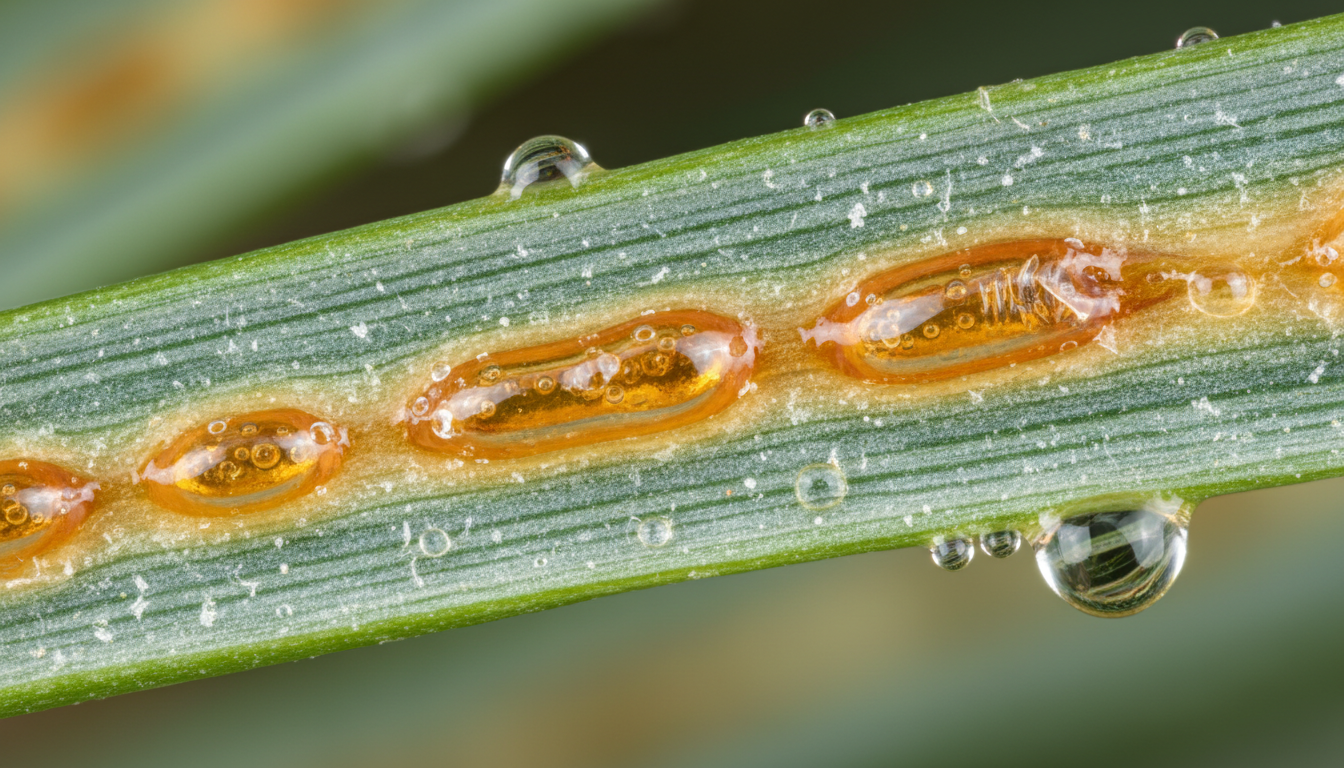
Some plants contain natural chemicals that burn extremely fast and hot. These include volatile oils, resins, and aromatic compounds.
High-Oil Plants Act Like Fuel
Volatile oils combust quickly, creating high flame lengths and intense heat. When airborne, these oils can even ignite before the plant catches fire.
Highly flammable oil-rich plants include:
- Many aromatic herbs (sages, rosemary, thyme)
- Eucalyptus
- Juniper
- Cedar
- Pine
- Cypresses
- Some lavenders
Even when green, these plants burn with surprising intensity.
Low-Oil Flowers Are Far Safer
Flowers with mild scents and minimal resin are generally safer for firewise landscaping. Many perennials with broad, fleshy leaves fall into this category.
Low-oil examples:
- Yarrow (when maintained)
- Daylily
- Sedum
- Ice plant
- Coreopsis
- Coneflower
3. Low Accumulation of Dead Material
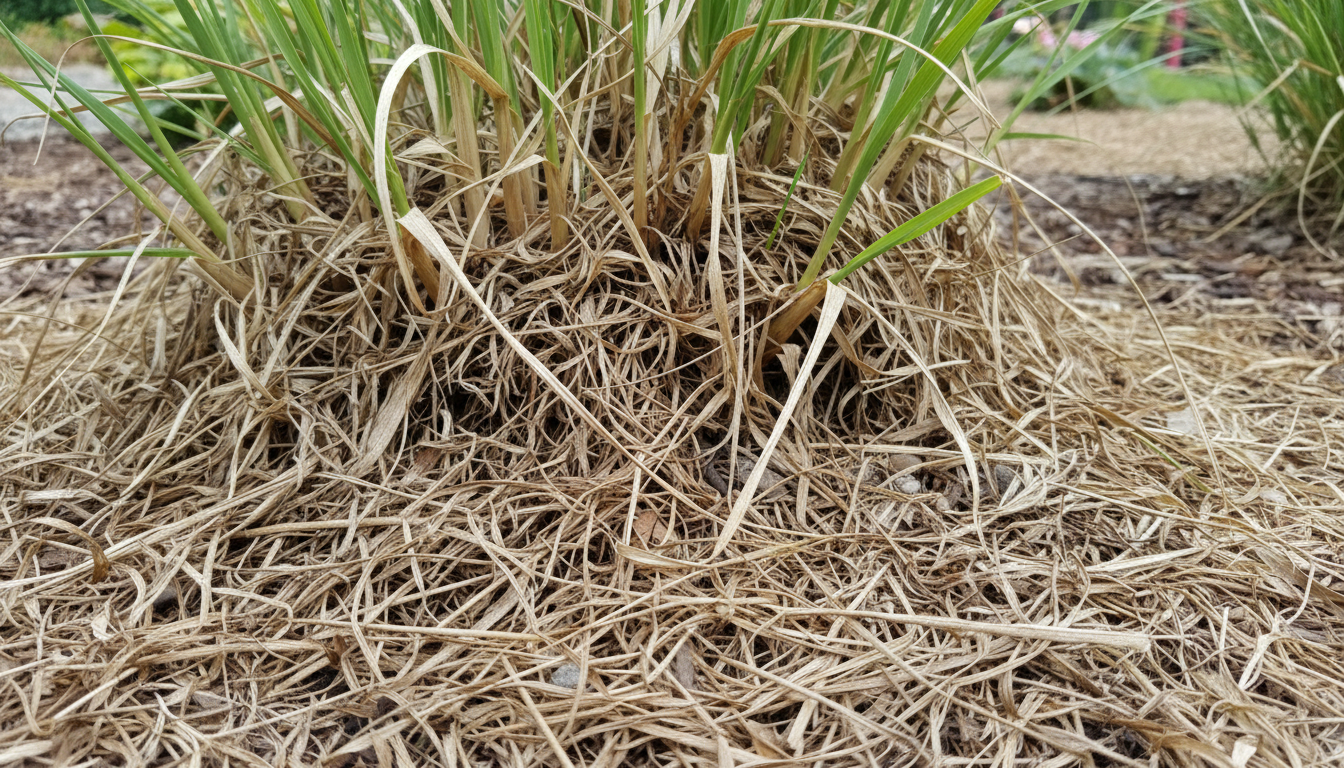
One of the largest contributors to plant flammability is the buildup of dry, dead matter. Even a fire-resistant plant becomes hazardous if it stores:
- Dry stems
- Dead flowers
- Leaf litter
- Thatch at the base
- Hollow or woody stalks
Why Dead Material Is Dangerous
Dry organic matter ignites almost immediately under embers. These materials act as tinder, transforming an otherwise safe plant into a fire starter.
Highly litter-prone plants include:
- Ornamental grasses
- Older lavender shrubs
- Conifers that shed needles
- Evergreen shrubs with dense interiors
- Roses (if unmaintained)
Plants With Minimal Litter Are Safer
Flowers that grow cleanly with little dry debris pose far less ignition risk.
Examples:
- Ice plant
- Moss rose
- Daylily
- California fuchsia
- Zinnias (when deadheaded)
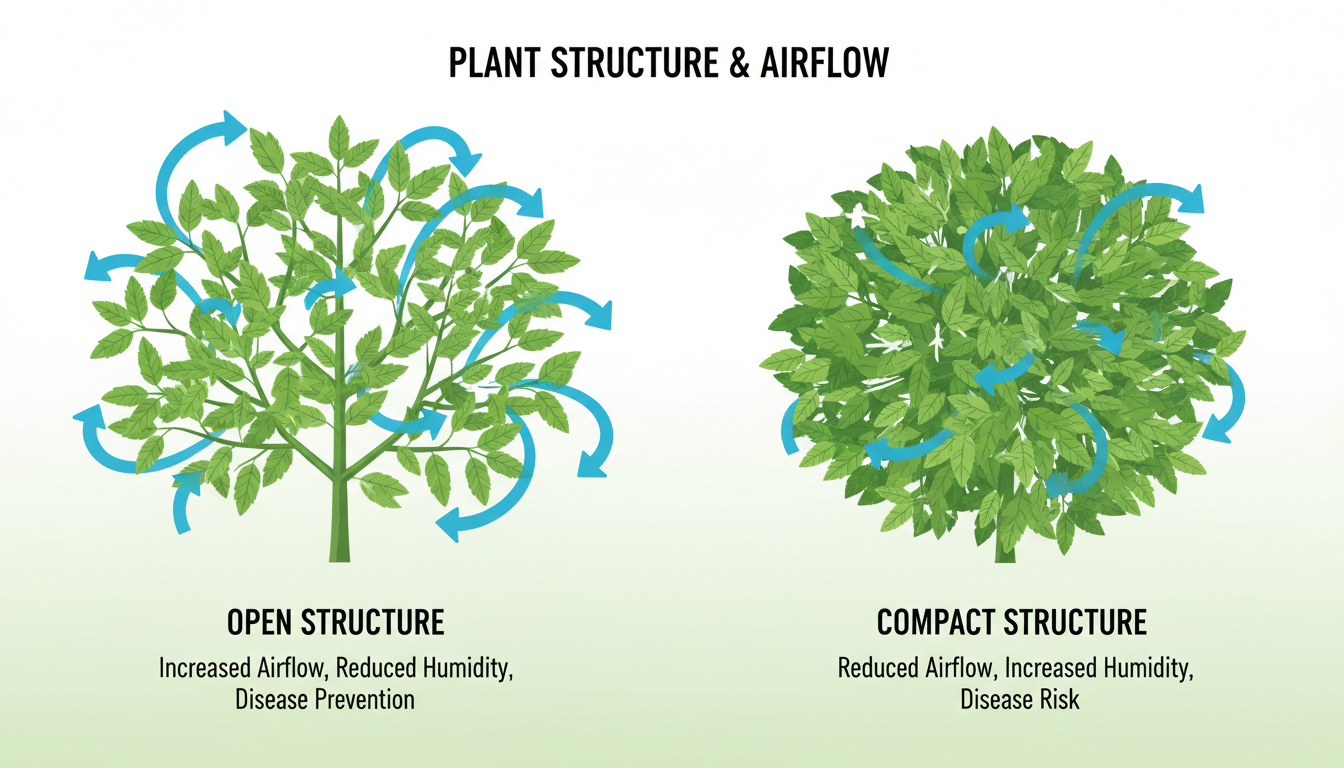
4. Open, Loose Growth Structure
Dense, compact plants trap heat and can ignite more easily than flowers with an open structure that allows air movement.
Open Growth = Cooler Plant
Air circulation helps dissipate heat. Plants with spaced stems or wide leaf arrangements have lower temperatures during radiant heat exposure.
Open-structured, safer examples:
- Coneflower
- Rudbeckia
- Coreopsis
- Many herbaceous perennials
Dense Growth = Higher Flammability
Plants with tight, compact forms create built-up heat pockets.
Dense, higher-risk examples:
- Boxwoods
- Compact junipers
- Dense evergreen shrubs
- Tight mounding herbs (rosemary, lavender)
5. Non-Woody, Herbaceous Growth
Wood burns. Tender herbaceous stems do not burn nearly as readily as woody or resinous stems.
Low-Flammability: Soft Stems
Most flowers and perennials are naturally less flammable because their stems stay green.
Examples:
- Daylilies
- Yarrow
- Many daisies
- Succulents
- Hydrangea (with regular pruning)
High-Flammability: Woody Components
Woody-based plants, including some flowers and shrubs, can accumulate dry branches inside the canopy.
High-risk examples include:
- Older lavender bushes
- Woody sages
- Shrubby salvias
- Roses (if not pruned)
Fire-Resistant Flowers: What the Science Supports
Below are flowers frequently recommended by firewise landscaping programs due to their water content, low oil production, and low debris output.
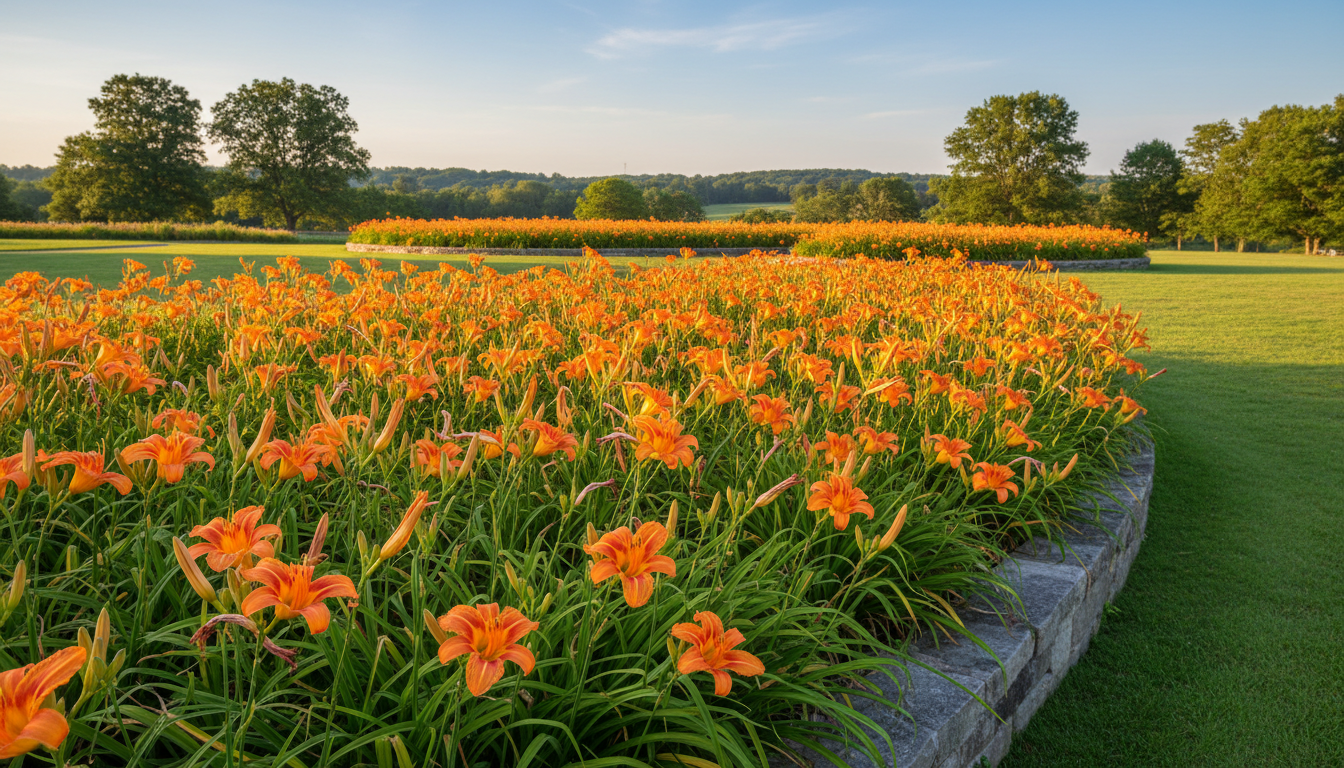
1. Daylilies (Hemerocallis)
Why They Are Fire-Resistant
Daylilies are herbaceous perennials with thick, moisture-rich foliage. They don’t produce woody stems, and their leaves remain fleshy throughout the growing season.
- High water storage
- Minimal dead leaf accumulation
- Easy maintenance
- Clumping habit doesn’t trap heat
2. Ice Plant (Delosperma)
The Succulent Advantage
Ice plants are among the most fire-resistant flowers due to their exceptionally high moisture content. Their leaves are thick and cool, resisting ignition even under intense heat.
- Very low flammability
- Low-growing
- Spreads without building dry thatch
- Great for defensible space
3. Sedum (Sedum spp.)
Cool, Moist Foliage
Sedum retains moisture deep into drought periods, maintaining natural fire resistance.
- Fleshy stems
- Minimal debris
- Low aromatic content
Works well in firewise rock gardens.
4. Coreopsis
Open Growth Habit
Coreopsis has thin, open stems that reduce heat retention. The flowers contain low resin and produce little litter if deadheaded.
- Non-dense structure
- Low flammability
- Attractive for pollinators
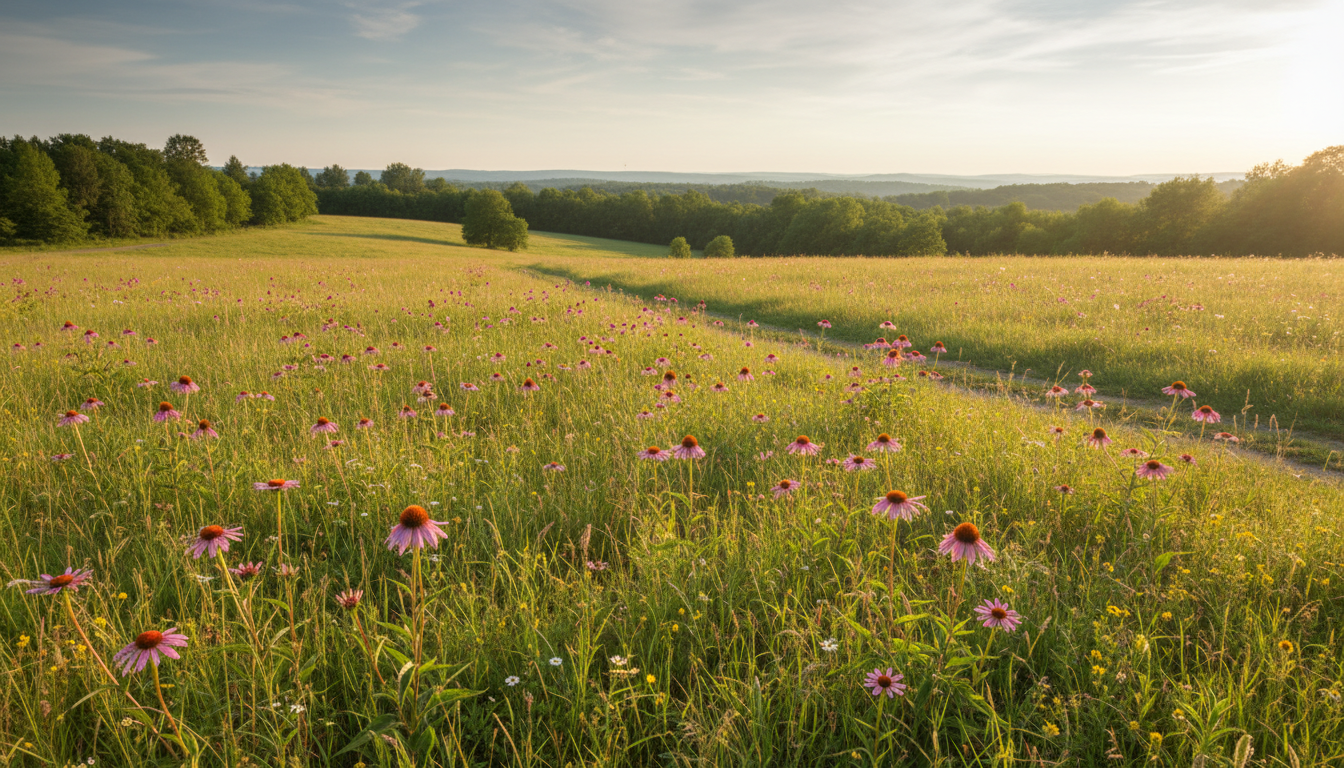
5. Coneflower (Echinacea)
Herbaceous and Clean-Growing
Coneflowers are herbaceous, non-woody perennials that maintain high moisture. They shed minimal material and provide good airflow around stems.
- High water content
- Loose, airy growth
- Low resin
Plants and Flowers to Avoid in Fire-Prone Landscapes
Below are plants commonly found in gardens but known to be highly flammable. Their composition, oils, or structure make them hazardous near homes.
1. Aromatic Sages (Many Salvia Species)
Why They Are Flammable
Though beautiful and fragrant, many varieties of sage contain volatile oils. Their woody stems and high litter output increase the risk further.
- High oil content
- Aromatic compounds ignite easily
- Can accumulate dry stems
2. Lavender
The Hidden Fire Risk
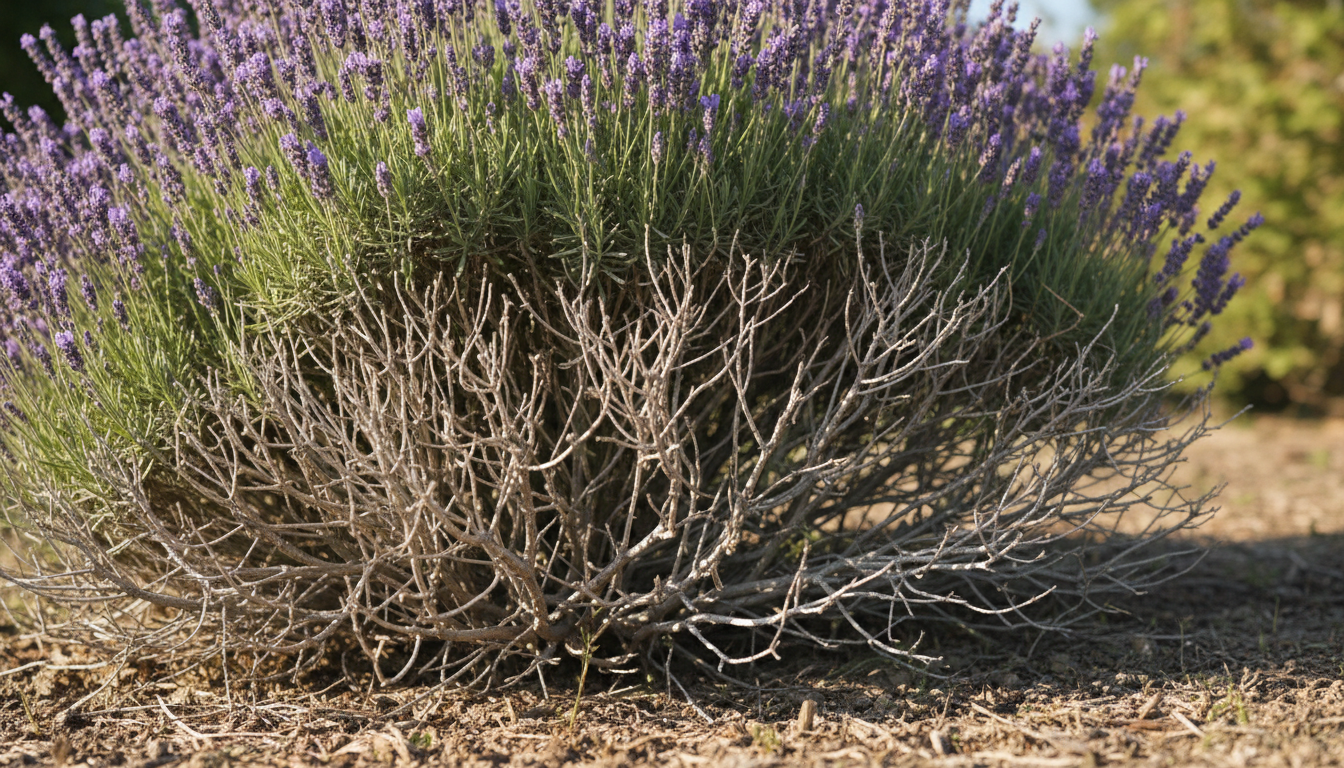
Lavender is beloved for fragrance, but that fragrance is produced by combustible essential oils. Mature lavender shrubs also accumulate woody material in their centers.
- Highly aromatic oils
- Woody inner stems
- Large amounts of dry material
3. Junipers
One of the Most Flammable Landscape Plants
Junipers contain resins that burn hot. Their dense, compact growth traps dead needles that act as tinder.
- High resin content
- Needle litter
- Dense structure
Avoid planting them anywhere near structures.
4. Rosemary
Like Nature’s Kindling
Rosemary is extremely aromatic, loaded with oils. When dry, it ignites almost instantly and burns intensely.
- Flammable oils
- Woody stems
- Needle-like leaves
5. Fine-Needled Conifers
This includes:
- Pine
- Cypress
- Cedar
- Spruce
Fire Behavior
Fine needles ignite faster than broad leaves, while the resins within the foliage burn with explosive energy.
6. Ornamental Grasses
Though visually appealing, many grasses dry out seasonally.
Risk Factors
- High thatch accumulation
- Hollow stems carry flame
- Fast fire spread
Certain grasses can be used only if trimmed back heavily every season.
Deciduous vs. Evergreen: Which Burns Faster?
Understanding plant type contributes to firewise planning.
Deciduous Plants
Lose leaves seasonally, reducing the amount of flammable material present at any given time.
Advantages
- Leaves generally contain more moisture
- Less resinous
- Growth is herbaceous
- Seasonal shedding is predictable
Examples:
- Hydrangea
- Daylily
- Coneflower
- Yarrow (when maintained)
Evergreen Plants
Retain foliage year-round, often with higher levels of oils, waxes, or resins.
Flammability Factors
- Needles dry quickly
- Resin increases burn intensity
- Dense growth structures trap heat
Examples:
- Juniper
- Cypress
- Pine
- Many aromatic herbs
Environmental Conditions That Increase Flammability
Even fire-resistant flowers can become risky in unfavorable conditions.
1. Prolonged Drought
Moisture content drops, increasing ignition potential.
2. Poor Maintenance
Deadhead, prune, and clean debris regularly.
3. Overcrowded Planting
This creates a continuous fuel path between plants.
4. Hot, Dry Wind
Pulls moisture from leaves quickly.
Firewise landscaping requires ongoing care, not just initial plant selection.
How to Use Fire-Resistant Flowers in Landscape Design
Understanding plant science is step one. Creating a safer garden is the next.
1. Place Fire-Resistant Plants in Zone 1 (0–5 Feet From Home)
Examples ideal for this zone:
- Ice plant
- Sedum
- Hens and chicks
- Daylily
- Coreopsis
Avoid woody shrubs entirely.
2. Use Clean Borders and Hardscaping
Interruption zones stop fire movement.
Good choices:
- Gravel
- Stone mulch
- Paver strips
- Rock gardens
3. Space Plants to Reduce Fuel Connectivity
Even fire-resistant flowers ignite if packed tightly.
Ideal spacing:
- Small perennials: 12–18 inches
- Medium perennials: 18–24 inches
- Succulents: 6–12 inches
4. Maintain Moisture
Use drip irrigation or regular watering.
Dry plants—no matter the species—burn faster.
5. Remove Dead Material Immediately
Especially from:
- Grasses
- Yarrow
- Coneflower
- Daylilies
- Lavender
Key Takeaway: Fire Resistance Comes From Biology, Not Beauty
A flower’s fire resistance depends on measurable, scientific plant characteristics—not its color, size, or popularity. High moisture content, low volatile oils, minimal dead matter, and open growth structures make certain species far safer during a wildfire. On the other hand, aromatic herbs, needle-leaf evergreens, and high-litter plants act like natural fuel.
By understanding these traits, homeowners can design landscapes that are not only beautiful but also defensible. With careful plant selection and consistent maintenance, your garden can remain vibrant while contributing to a safer environment around your home.