
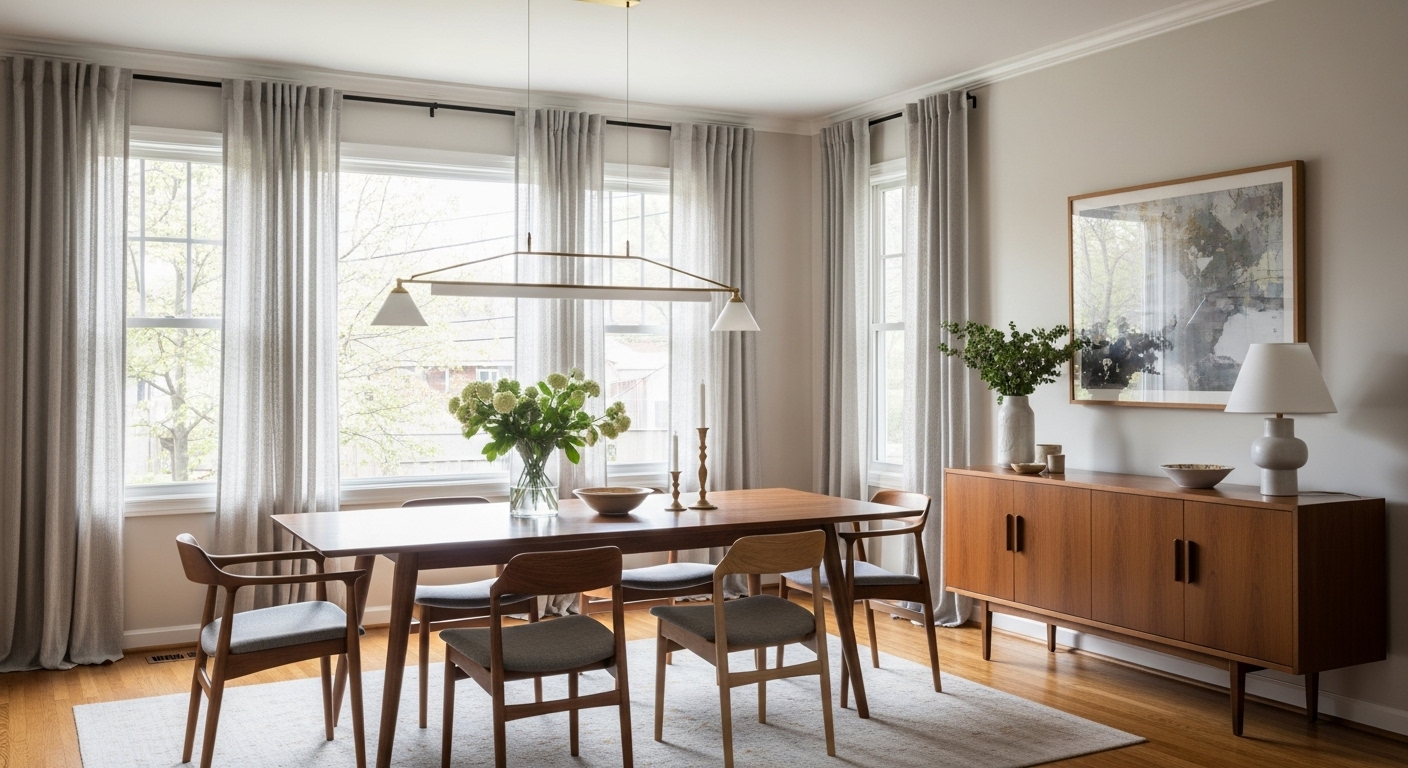
Dining rooms have quietly evolved over the past decade. Once reserved for formal meals and special occasions, they are now multi-purpose spaces used for everyday dining, remote work, homework, and social gatherings. As lifestyles change, so do design expectations.
However, many homes still feature dining rooms that feel heavy, dated, or disconnected from modern living—often without homeowners realizing why. The issue is rarely about furniture quality or budget. Instead, it usually comes down to design features that no longer align with how people live today.
This guide breaks down five dining room features that interior designers say are becoming outdated, explains why they no longer work, and offers practical, modern alternatives you can implement without tearing everything apart.
If your dining room feels stuck in the past, this article will help you understand what to update—and what to keep.
1. Formal, Matchy-Matchy Dining Sets
Why This Look Is Falling Out of Favor
Traditional dining rooms often revolve around a perfectly matched set: table, chairs, china cabinet, and sideboard all in the same wood tone and style. While once considered elegant, this approach now feels overly rigid and visually heavy.
Designers increasingly view these sets as:
- Too formal for modern lifestyles
- Lacking personality
- Difficult to adapt to casual daily use
Modern homes prioritize comfort, flexibility, and individuality—qualities that uniform dining sets struggle to provide.
What to Do Instead
A more current approach focuses on intentional contrast.
Modern alternatives include:
- Mixing chair styles around one table
- Pairing a wood table with upholstered or metal chairs
- Using a bench on one side for casual seating
- Choosing a statement table and keeping seating simple
This approach creates a layered, lived-in look while making the space feel more welcoming.
Budget-Friendly Update Tip
You don’t need to replace everything. Start by swapping just the chairs or removing one matching piece, such as the china cabinet.
2. Heavy Window Treatments That Block Light
Why Designers Are Moving Away From Them
Thick drapes, valances, and layered curtains were once used to make dining rooms feel formal and enclosed. Today, they often make the space feel:
- Dark
- Smaller than it is
- Visually dated
Natural light has become one of the most valued elements in interior design, and heavy window treatments work directly against it.
Modern Window Treatment Alternatives
Designers now favor solutions that balance privacy with openness.
Popular choices include:
- Sheer curtains
- Light linen panels
- Simple roller shades
- Roman shades in neutral fabrics
- Leaving windows completely bare if privacy allows
The goal is to let light shape the room while keeping the focus on the dining experience itself.
Design Insight
Dining rooms benefit from daylight because it makes meals feel more relaxed and enhances the appearance of food, surfaces, and finishes.
3. Overly Formal Lighting Fixtures
Why Traditional Chandeliers Feel Dated
Classic crystal chandeliers or ornate brass fixtures used to define dining room elegance. While they still have a place in some homes, many now feel oversized or disconnected from modern interiors.
Designers note that these fixtures often:
- Overpower the room
- Feel too formal for everyday use
- Clash with simpler, modern furnishings
As dining rooms become more casual, lighting needs to follow suit.
Updated Lighting Choices That Work Better Today
Modern dining room lighting focuses on clean lines and scale rather than decoration.
Popular alternatives include:
- Linear pendant lights
- Minimalist globe fixtures
- Matte black or brushed metal finishes
- Soft, warm LED lighting
- Adjustable or dimmable fixtures
Lighting should enhance conversation and atmosphere, not dominate the room.
Installation Tip
Always size your fixture based on table dimensions, not room size. An oversized light can make even a well-designed dining room feel awkward.
4. The Traditional China Cabinet as a Focal Point
Why China Cabinets Are Losing Popularity
Once a symbol of refinement, china cabinets were designed for storing fine dishware used only a few times a year. Today, they often appear:
- Bulky
- Underutilized
- Visually outdated
Modern households value storage that serves daily needs rather than special-occasion items.
Modern Storage Alternatives
Designers now recommend storage that feels integrated and purposeful.
Better options include:
- Low-profile sideboards
- Built-in shelving with mixed display items
- Closed cabinets with clean lines
- Floating shelves styled with everyday pieces
If you still want to display dishes, mix them with books, plants, or decorative objects for a balanced look.
Repurposing Tip
If removing a china cabinet isn’t an option, consider repainting it in a modern neutral color and restyling the contents to reduce visual heaviness.
5. Separate, Closed-Off Dining Rooms
Why This Layout Feels Outdated
Dining rooms were traditionally enclosed spaces, often used only for formal meals. Today, this layout conflicts with how families actually live.
Designers find that closed-off dining rooms:
- Sit unused most of the year
- Feel disconnected from kitchens
- Limit natural flow and interaction
Open and flexible spaces are now preferred.
Modern Layout Solutions
You don’t need to remove walls to modernize a dining room’s feel.
Simple updates include:
- Widening doorways
- Using glass doors instead of solid ones
- Creating visual continuity with flooring and color
- Designing the room for multiple uses, such as dining plus work or hobbies
A dining room that adapts to daily life feels instantly more modern.
How to Modernize Without a Full Remodel
One of the biggest misconceptions is that updating a dining room requires major renovation. In reality, strategic changes can have a dramatic impact.
High-Impact, Low-Effort Updates
- Replace lighting
- Swap chairs
- Lighten window treatments
- Update wall color
- Reduce visual clutter
- Add texture through rugs or artwork
Focusing on one outdated feature at a time keeps the process manageable.
Common Mistakes to Avoid When Updating a Dining Room
- Replacing everything at once without a plan
- Choosing trends that don’t match your home’s architecture
- Ignoring scale and proportions
- Overdecorating the table
- Forgetting functionality
A modern dining room should feel effortless, not staged.
How to Know If Your Dining Room Needs an Update
Ask yourself:
- Does the room feel too formal for daily use?
- Is it darker than necessary?
- Do you avoid using it unless guests are over?
- Does it feel disconnected from the rest of the home?
If the answer is yes to more than one, small updates can make a big difference.
Future-Proof Dining Room Design Principles
Designers agree on a few principles that will remain relevant for years:
- Comfort over formality
- Flexibility over rigidity
- Light over heaviness
- Personal expression over matching sets
- Function alongside beauty
Following these ideas helps avoid future “outdated” labels.
Conclusion
Dining room design has shifted from formality to functionality. Features that once symbolized elegance—matching furniture, heavy curtains, ornate lighting, and closed-off layouts—no longer support modern lifestyles.
Updating an outdated dining room doesn’t require starting from scratch. By identifying which elements are holding the space back and replacing them with lighter, more flexible alternatives, homeowners can create dining rooms that feel current, comfortable, and inviting.
A modern dining room isn’t about trends—it’s about designing a space that works for how people actually live today.