

When wildfires move through a landscape, the flames often travel horizontally across dry vegetation in search of new fuel. That’s why the space closest to the ground—where leaves, stems, and debris collect—plays one of the biggest roles in slowing or speeding up fire. Low-growing groundcovers offer a powerful defensive tool. The right species form dense, moist, fire-resistant mats that help interrupt flame movement, reduce radiant heat, and limit the ladder fuels that allow fire to climb upward. This guide explores how groundcovers serve as living firebreaks and profiles five standout flowering varieties that combine beauty with critical fire defense.
Groundcover Guardians: 5 Low-Growing Blooms to Create a Natural Firebreak
1. Why Groundcovers Matter in Firewise Landscaping
Groundcovers sit at the very bottom of your landscape’s fuel structure. They are the first line of defense against creeping flames, wind-blown embers, and heat transfer across the soil surface.
The right groundcovers create a moist, low-profile, horizontal layer that reduces the spread and intensity of wildfire within defensible space. In contrast, poorly chosen groundcovers—especially those with dry leaves, aromatic oils, or woody stems—can accelerate fire and increase the risk to your home.
Below are the core reasons Firewise experts often emphasize groundcovers.
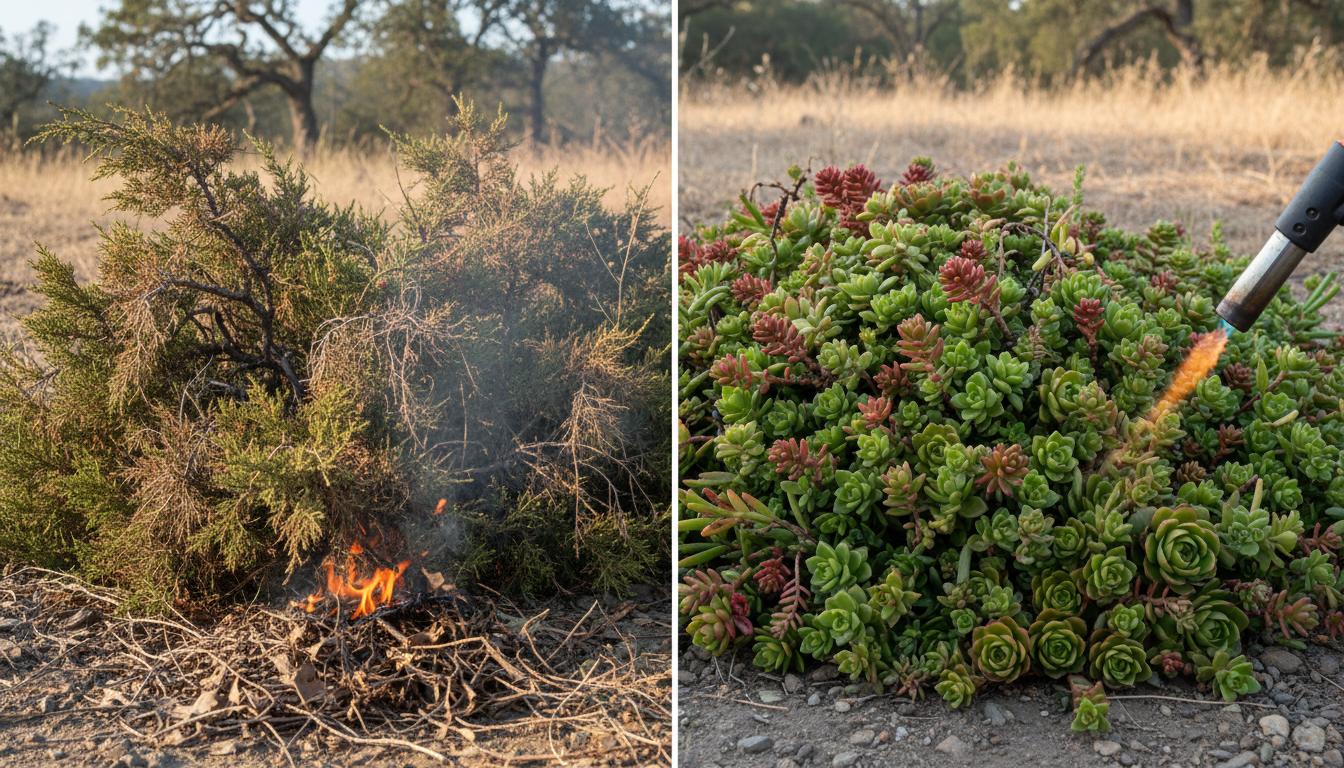
They Interrupt Horizontal Flame Spread
A healthy groundcover mat prevents fire from moving quickly across your yard. Some even act as “heat sinks” due to their fleshy leaves and high internal moisture.
They Prevent the Creation of Ladder Fuels
Ladder fuels allow fire to move from low vegetation into shrubs, then into trees, and finally into structures.
Low-growing, non-woody groundcovers have:
- Minimal height
- Few dead stems
- Slow litter accumulation
- A compact structure that resists ignition
This sharply reduces vertical fire movement.
They Reduce Soil-Level Fuel Build-Up
Dry mulch, fallen leaves, and exposed grasses provide easy ignition zones. Many fire-resistant groundcovers act as mulch alternatives by shading soil, suppressing weeds, and retaining moisture.
They Provide Dual Functions: Erosion Control + Fire Defense
On slopes, groundcovers:
- Hold soil in place
- Slow runoff
- Stabilize wildfire-prone embankments
- Create firebreak strips between zones
This dual-function is especially valuable in hilly, drought-prone regions.
2. What Makes a Groundcover “Fire-Resistant”?
No plant is entirely fireproof, but some possess natural characteristics that make them far harder to ignite.
High Moisture Content
Plants with fleshy or succulent leaves store water in their tissues. Fire must first evaporate that moisture before it can burn, drastically slowing ignition.
Examples:
- Ice plant
- Sedums
- Aloe varieties (low-growing types)
Minimal Oils and Resins
Highly aromatic plants such as rosemary, sages, and junipers burn more easily due to volatile oils.
Fire-resistant groundcovers avoid this trait, staying low-scent and low-oil.
Flexible, Non-Woody Growth
Soft stems and herbaceous tissues ignite slower than woody shrubs.
Low Litter Production
Groundcovers that drop leaves constantly or accumulate dead material are poor choices for firebreaks.
The best groundcovers stay evergreen, compact, and tidy.
Open Airflow Structure
Plants that allow air to flow through their stems—without dense dry pockets—keep heat levels lower.
3. Where Groundcover Firebreaks Work Best
Groundcover firebreaks are used strategically, especially in Defensible Space Zones.
Zone 1 (0–5 feet from structures)
This zone demands plants that are:
- Non-woody
- Low-growing
- Moist and compact
- Easy to maintain
Groundcovers here act as a buffer that minimizes flame direct contact with walls and foundations.
Zone 2 (5–30 feet)
Groundcovers help interrupt continuous fuels between shrubs and ornamental beds.
Ideal for:
- Pathway borders
- Rock gardens
- Under trees with pruned lower branches
- Slope stabilization
Zone 3 (30+ feet)
Groundcovers form part of larger firebreak lines along property edges, fences, or natural corridors.
4. The Five Best Low-Growing Flowering Groundcovers for a Natural Firebreak
Each species below meets Firewise criteria while adding color and texture to your landscape.
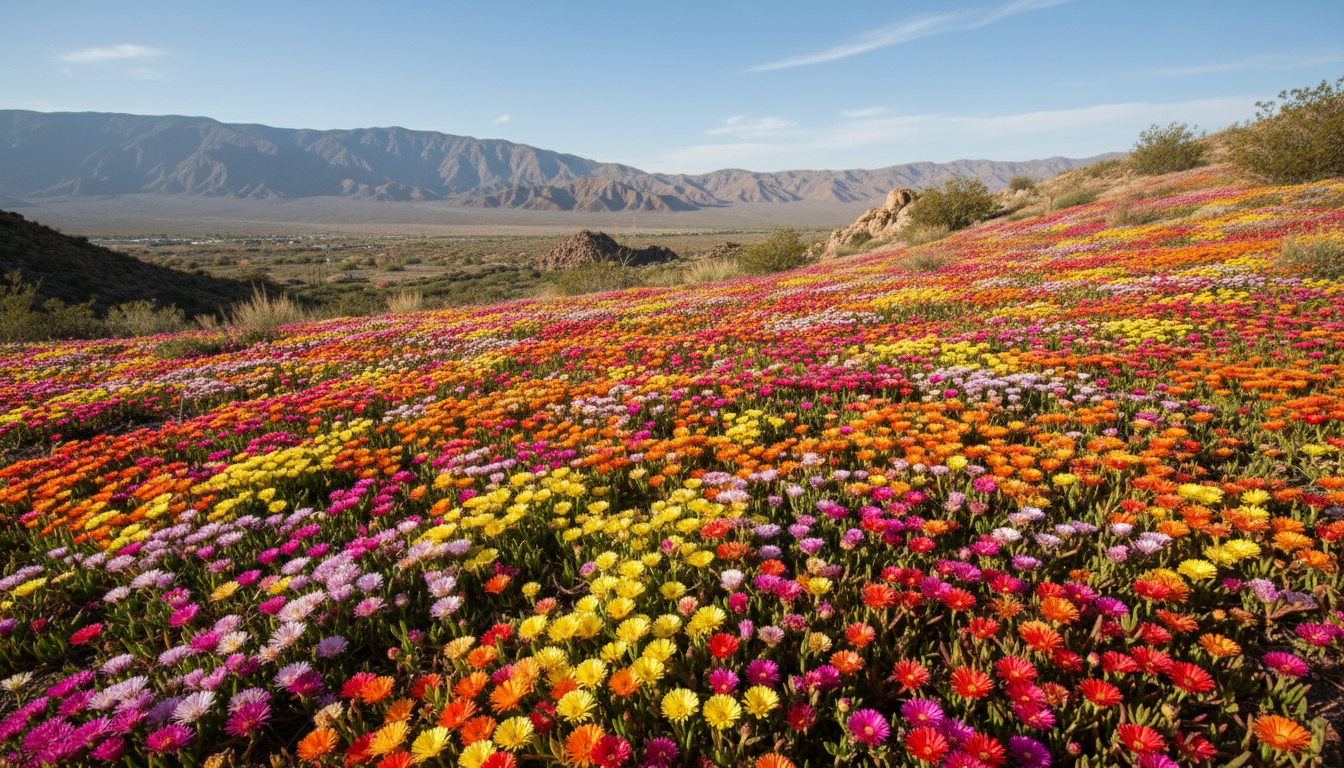
1. Ice Plant (Delosperma)
Best for: Hot, dry slopes and high-sun retention areas
Height: 2–3 inches
Bloom Colors: Pink, purple, yellow, white
Ice plant is one of the top recommended fire-resistant groundcovers for arid climates. Its leaves are thick, fleshy, and loaded with water. The plant forms a dense mat that stays moist long into the heat of the day.
Why It Works as a Firebreak
- Exceptional water storage in leaves
- Spreads quickly across slopes
- Fills gaps where sparks would otherwise land
- Minimal litter production
- Non-woody stems
- Nearly evergreen in many regions
Ice plant behaves like a living fire-resistant carpet.
2. Creeping Thyme (Thymus serpyllum)
Best for: Pathway edges and stepping-stone fills
Height: 2–4 inches
Bloom Colors: Pink, purple, magenta
Although aromatic herbs usually fall on the flammable list, creeping thyme is an exception when properly maintained, because:
- It grows extremely close to the ground
- It produces minimal woody stems
- It forms a tight, low mat with limited air gaps
- It holds moderate moisture in leaves
The plant ignites more slowly than taller, woodier thyme varieties.
Firewise Benefits
- Dense coverage smothers dry soil
- Low height prevents vertical flame travel
- Acts as a “living mulch” underfoot
- Suppresses weeds that would otherwise dry out and ignite

3. Sedum (Stonecrop Groundcovers)
Best for: Harsh, rocky, low-water zones
Height: 3–6 inches
Bloom Colors: Yellow, white, pink
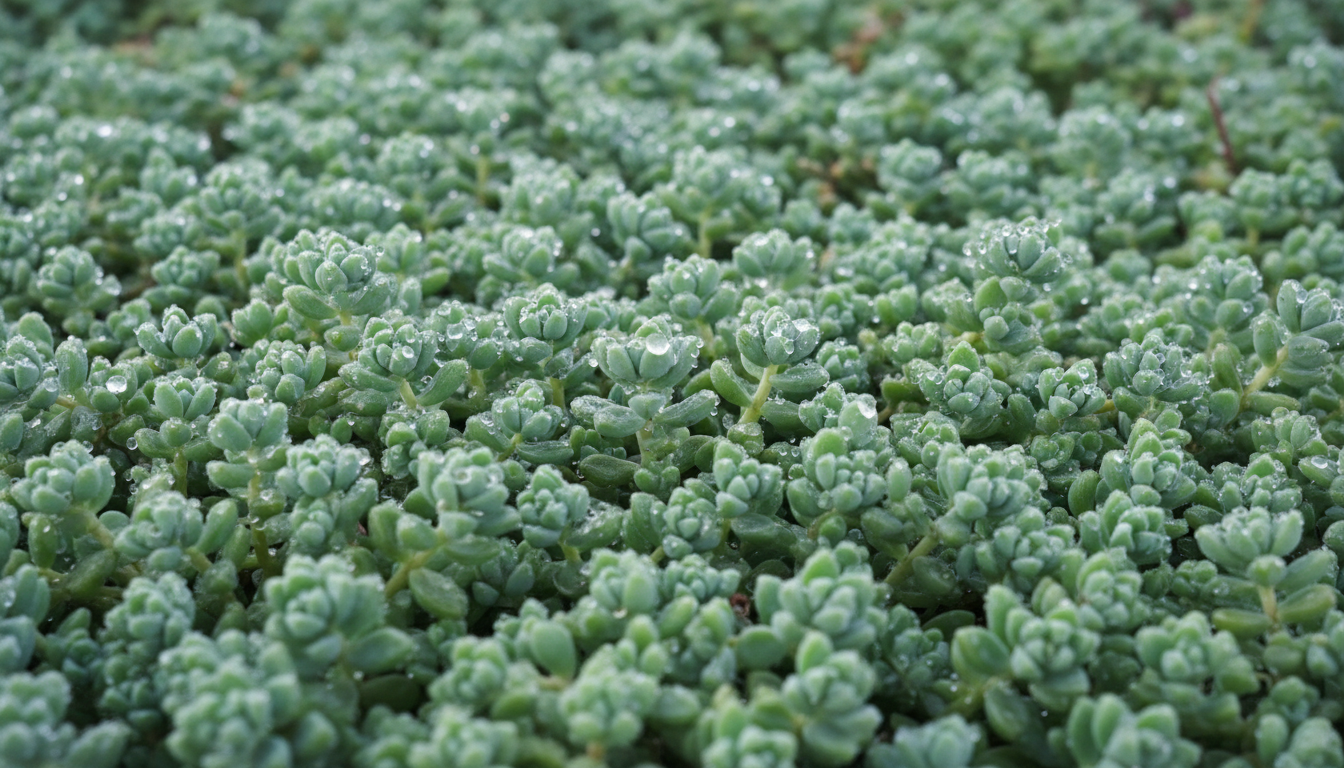
Sedum is a succulent family with exceptional fire-resistant traits. Sedum groundcovers store significant water in their leaves and maintain a very low height profile.
What Makes Sedum Fire-Smart
- Thick, moisture-packed leaves
- Very little plant litter
- Leaves stay cool and hydrated even in intense heat
- Rapidly fills open ground
- Wide-spreading, root-from-node mats
Many firebreak installations use Sedum across gravel beds or rock walls to block flame spread effectively.

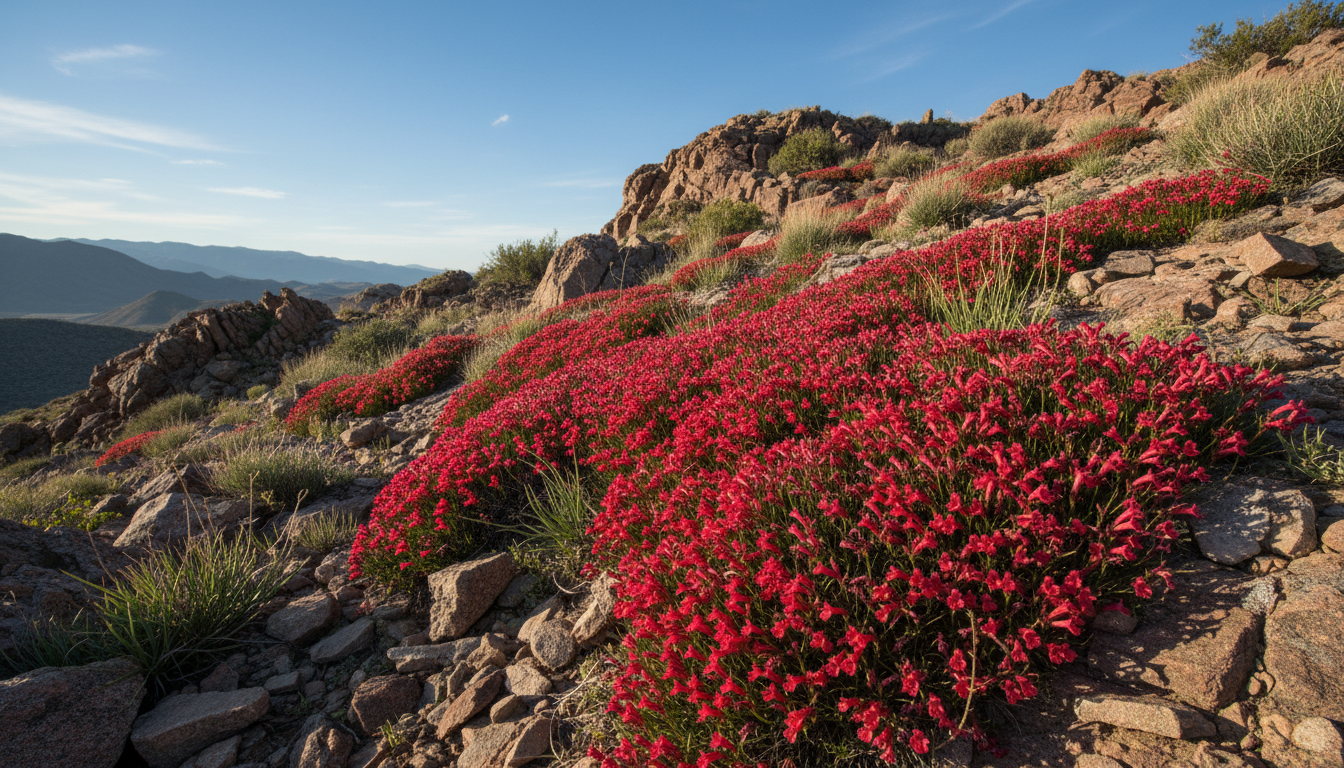
4. Penstemon pinifolius (Pineleaf Beardtongue)
Best for: Slopes, rock gardens, and erosion sites
Height: 8–12 inches (still groundcover-like)
Bloom Colors: Bright red or orange
Though slightly taller than classic groundcovers, Pineleaf Beardtongue is ideal for firebreaks on slopes. Its foliage is fine-textured but not oily, and it creates an airy, non-flammable shape that reduces heat transfer.
Why It’s Firewise
- High moisture content in stems
- Produces very little dead material
- Flowers attract pollinators without adding fuel
- Maintains a cushion-like form
- Offers seasonal color without fire risk
It’s especially valuable when used between low grasses or as a border around structures.
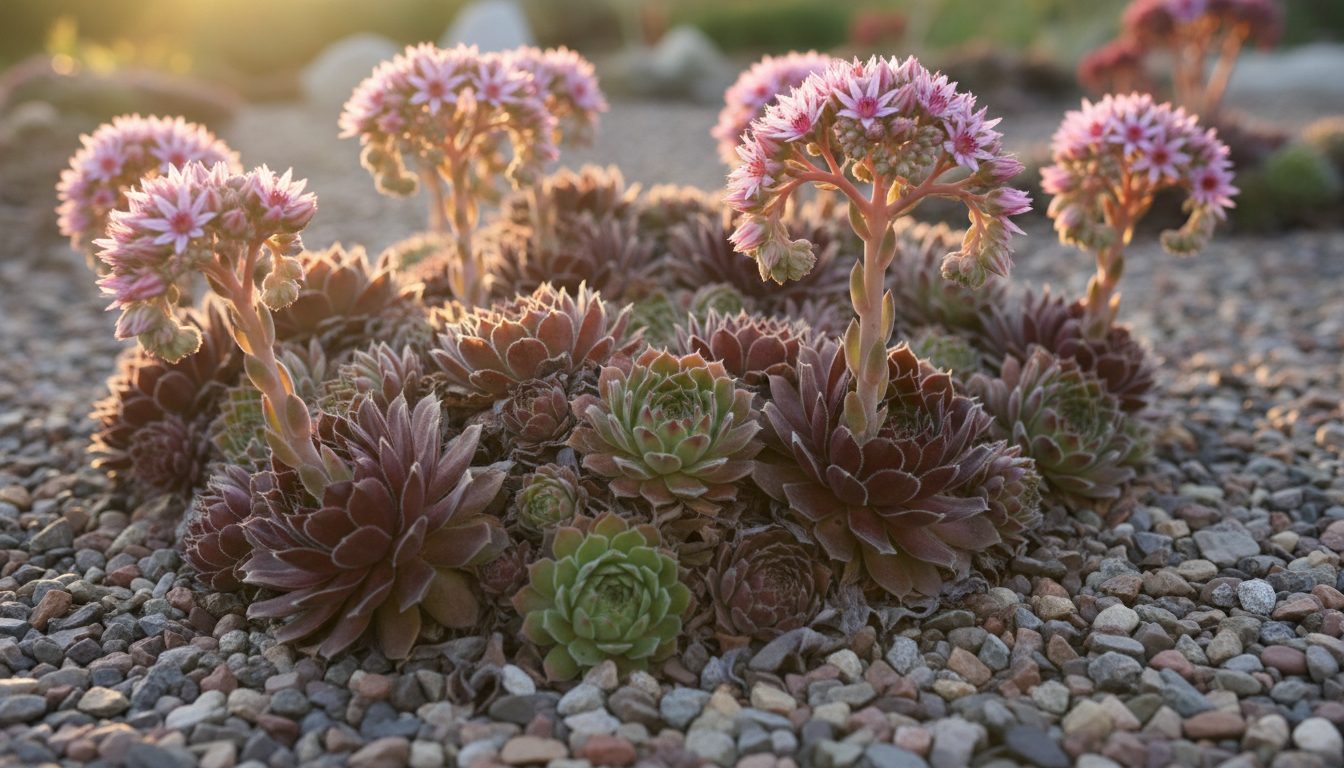
5. Hens and Chicks (Sempervivum)
Best for: Dry, windy, rocky gardens
Height: 1–3 inches
Bloom Colors: Pink, red, star-shaped blooms
Hens and Chicks might be the most fire-resistant flowering groundcover you can plant due to their rosette shape and water-loaded leaves.
Why They Excel as a Firebreak
- Dense rosettes smother soil
- Virtually no flammable oils
- Extremely low-growing
- Retain moisture even during drought
- Slow-burning due to their structure
Planted in clusters, they create a tight pattern that naturally stops flames from advancing.
5. Planting Groundcovers for Maximum Fire Defense
Having fire-resistant plants matters—but arranging them effectively matters just as much.
Create Continuous, Moist Mats
Avoid gaps. Fire travels fastest through exposed soil, dead grass, or dry patches.
Groundcovers should:
- Overlap
- Touch across edges
- Create a unified layer
Use Gravel or Stone Mulch, Not Wood Mulch
Wood mulch is a fuel source. Firewise guidelines typically recommend:
- Gravel
- Pea stone
- Crushed granite
- Decomposed granite
Place groundcovers within stone fields rather than bark-based mulches.
Position Plants in Strategic Firebreak Strips
Consider these placements:
- Along property edges
- Below raised decks
- Around patios
- Along steep slopes
- Between shrubs and trees
- Between Zone 1 and Zone 2 as a buffer
Prune and Maintain Regularly
Even fire-resistant plants can accumulate debris if neglected.
Maintenance checklist:
- Remove dry flowers as needed
- Clear fallen leaves from nearby trees
- Water occasionally during prolonged heat
- Replace dead sections to maintain coverage
Combine Species for Layered Protection
Some groundcovers excel at heat tolerance, others at moisture retention. Mixing species creates redundancy and improves defense.
Example combo:
- Sedum + Ice Plant for succulent moisture
- Creeping Thyme in pathways
- Hens and Chicks around rocks
- Penstemon on slopes
6. Flowers and Groundcovers to Avoid Near Defensible Space
Not all low-growing flowers are Firewise-friendly. Some contain volatile oils, dense dry thatch, or flammable textures.
Avoid the following within 30 feet of structures:
Juniper groundcovers
Contain highly flammable oils.
Creeping rosemary
Aromatic and resinous.
Highly resinous sages (some ornamental Salvias)
Check specific species, as some are safer than others.
Dry, tufted ornamental grasses
Even low-growing grass tufts can ignite quickly.
Dry, woody mat-forming shrubs
Some prostrate shrubs produce flammable stems.
7. Example Layout for a Firebreak Groundcover Bed
Here’s a simple layout that uses the five recommended species.
Front (Closest to Structure)
- Hens and Chicks (Sempervivum)
- Sedum groundcovers
These form a high-moisture, ultra-low layer directly adjacent to buildings.
Mid-Layer (2–5 feet out)
- Ice Plant
- Creeping Thyme
These produce colorful blooms without adding height or woody stems.
Outer Layer (5–10 feet out)
- Penstemon pinifolius
Slightly taller, perfect for transitions and slope defense.
Key Takeaway
Groundcovers serve as one of the most effective and often overlooked tools in creating a wildfire-resilient landscape. By choosing low-growing, high-moisture, non-woody plants, you can slow flame spread, interrupt fuel pathways, and strengthen your property’s defensible space—all while adding color and beauty to your yard. The five species highlighted here offer both practical firebreak protection and drought-tolerant performance, making them ideal for modern Firewise gardens. Thoughtful placement, regular maintenance, and strategic layering turn these plants into living shields that help safeguard your home from wildfire threats.