
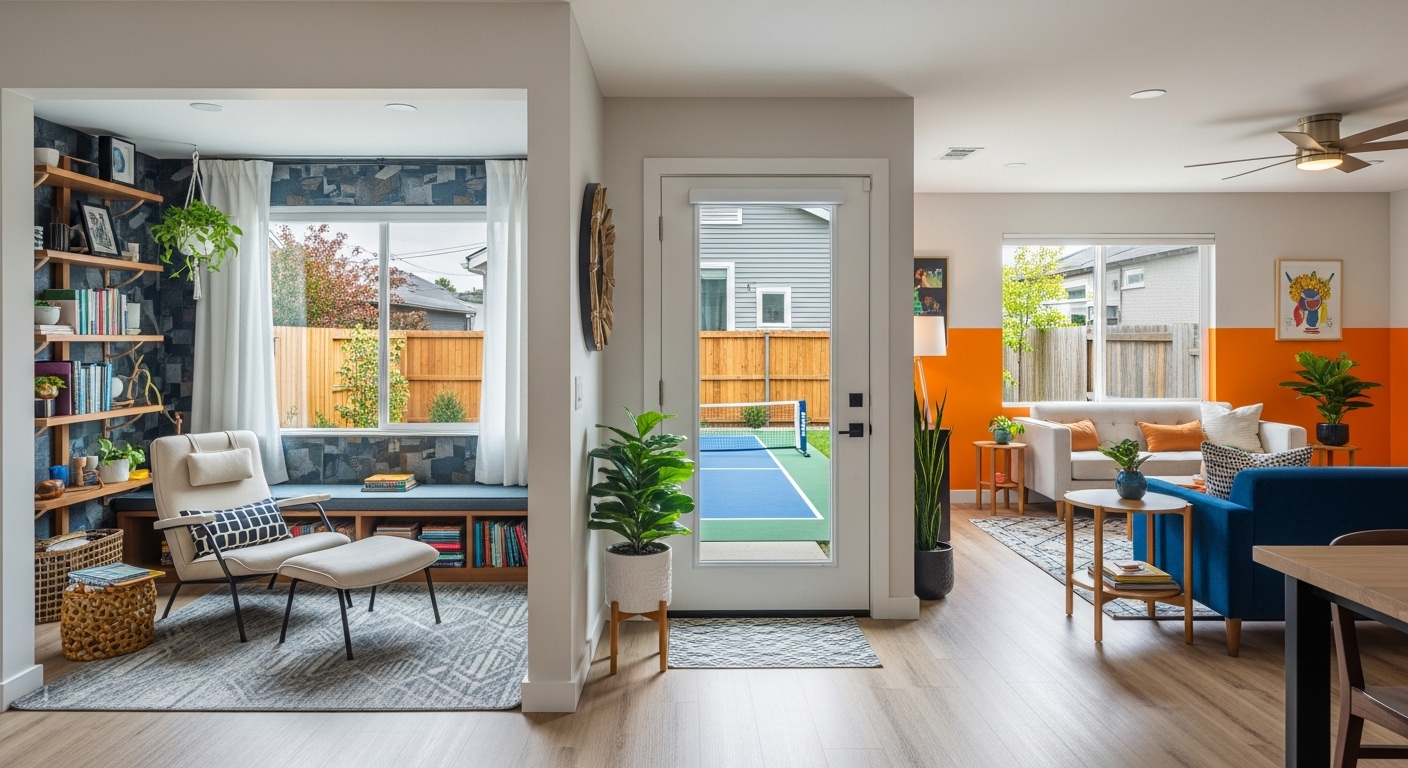
Every year, home design evolves to reflect lifestyle shifts, cultural trends, and technological influences. In 2026, interior designers predict that homes will focus on comfort, activity, and bold expression.
Some of the top trends include reading nooks for quiet moments, pickleball courts for backyard recreation, and color-drenched rooms that embrace bold, playful palettes. These trends are practical, fun, and adaptable to a wide range of homes.
This guide breaks down each trend, explains why it’s gaining popularity, and offers step-by-step ideas to incorporate it into your home without overspending or sacrificing style.
1. Cozy Reading Nooks: Your Personal Retreat
Reading nooks are making a major comeback in 2026. With digital burnout on the rise, homeowners are carving out small, calm spaces for analog activities like reading, journaling, or sketching.
Key Features of a Reading Nook
- Comfortable seating: lounge chairs, armchairs, or small sofas
- Soft lighting: floor lamps, table lamps, or wall sconces
- Shelving: bookshelves or floating shelves
- Textures: rugs, blankets, pillows to make the space cozy
- Optional desk: for writing or creative hobbies
How to Create a Reading Nook Step-by-Step
- Choose a quiet corner in a bedroom, living room, or hallway.
- Add seating that supports long reading sessions.
- Install layered lighting: natural light during the day, warm lamps at night.
- Add storage for books, journals, and small accessories.
- Incorporate soft textures: rugs, cushions, and throws.
- Decorate minimally: keep the focus on comfort and functionality.
Designer Tip
Even small homes can create nooks using window seats, built-in shelving, or repurposed corners. The goal is a space that encourages relaxation and daily use.
2. Backyard Pickleball Courts: Functional Fun at Home
Pickleball has exploded in popularity across the US, and homeowners are turning their backyards into multi-functional activity spaces.
Why Pickleball is Trending
- Easy for all ages and skill levels
- Requires minimal equipment
- Provides exercise without being overwhelming
- Encourages social interaction at home
Steps to Add a Pickleball Court
- Assess your backyard space: at least 20 x 44 feet for a full court.
- Choose your surface: concrete, asphalt, or multipurpose sport tiles.
- Install a net system: portable or permanent.
- Add boundary lines: use paint or tape for temporary setups.
- Consider multi-use options: combine with a basketball half-court or outdoor yoga space.
- Add seating: benches or chairs for spectators.
Budget-Friendly Alternatives
- Mini courts using tape for markings
- Portable nets for flexibility
- DIY court resurfacing with outdoor paint
Design Insight
Pickleball courts aren’t just for play—they increase the functional and resale value of your backyard, making the space more appealing for family and guests.
3. Color-Drenched Rooms: Bold and Playful Interiors
After years of neutral palettes, designers are embracing vivid, saturated colors in 2026. From walls to furniture and décor, color is back with purpose.
Why Color Matters
- Creates mood and energy
- Makes a statement in smaller or minimalist spaces
- Highlights architectural features
- Encourages personal expression
Popular Color Approaches
- Accent walls in bright jewel tones: emerald green, sapphire blue, or ruby red
- Color-blocked walls or furniture
- Layering multiple shades in textiles and décor
- Mixing muted and bold hues for contrast
Step-by-Step Guide to Adding Color
- Choose your base: neutral walls or soft tones.
- Pick a bold color accent: one wall, furniture piece, or large décor item.
- Add complementary accessories: cushions, rugs, curtains, or artwork.
- Layer shades for depth: don’t rely on a single flat color.
- Balance with neutrals: keep space visually comfortable.
- Test first: use small paint samples or swatches before committing.
Designer Tip
Bold color doesn’t have to be permanent. Furniture, textiles, and removable wallpaper allow you to experiment without long-term commitment.
4. Multi-Functional Spaces: Living Rooms That Do More
Another trend for 2026 is spaces that serve multiple purposes. Living rooms, kitchens, and even bedrooms are evolving into flexible areas for work, play, and relaxation.
Ways Designers Create Multi-Use Spaces
- Sectional sofas for lounging, reading, or working
- Folding desks or wall-mounted tables
- Movable partitions or screens
- Convertible furniture: sofa beds, nesting tables
How to Make Your Space Multi-Functional
- Identify daily activities in each room
- Use modular furniture for flexibility
- Incorporate storage that doubles as décor
- Keep pathways clear for easy rearrangement
5. Outdoor Living Integration
Indoor-outdoor flow is another trend that continues to grow. Homeowners are blurring boundaries between interiors and exteriors.
Key Elements
- Large sliding or folding doors
- Consistent flooring materials inside and out
- Covered patios with seating
- Outdoor kitchens and dining areas
- Integrated lighting for evenings
Practical Steps
- Decide which outdoor activities are priorities: dining, games, gardening.
- Extend interior furniture style to outdoor space.
- Use durable, weather-resistant materials.
- Add shade elements: pergolas, umbrellas, or retractable awnings.
- Incorporate plants and landscaping for a cohesive aesthetic.
6. Sustainability and Eco-Friendly Features
Sustainable design is a growing priority. Homes in 2026 are incorporating eco-conscious materials and energy-efficient systems without sacrificing style.
Designer Tips
- Use reclaimed wood for furniture and flooring
- Choose low-VOC paints
- Incorporate LED lighting
- Use energy-efficient appliances
- Incorporate greenery for natural air quality improvement
How Homeowners Can Start
- Start small with eco-friendly lighting or furniture
- Reuse existing items with DIY refinishing
- Include plants for both décor and sustainability
- Gradually replace appliances with energy-efficient alternatives
7. Layered Textures and Mixed Materials
Designers are combining materials and textures to create depth and interest.
Examples
- Velvet cushions with linen sofas
- Metal lighting with wood furniture
- Stone countertops with soft textiles
- Woven baskets for storage
How to Implement
- Pick a base material (wood or neutral fabric)
- Add complementary textures (metal, stone, textiles)
- Use layering in textiles, décor, and furniture
- Keep textures balanced—avoid overcomplicating the space
8. Statement Lighting
Lighting is becoming a key feature, not just functional. In 2026, large, bold, or sculptural light fixtures are common.
Tips
- Pendant lighting over dining areas
- Artistic chandeliers in entryways
- LED strip lighting for accent features
- Adjustable and dimmable options for flexibility
Why It Matters
Lighting can transform mood, highlight key features, and support multi-functional use of spaces.
Conclusion
The top home trends for 2026 focus on comfort, functionality, and bold expression:
- Cozy reading corners provide calm retreats.
- Pickleball courts add fun and active lifestyle spaces.
- Color-drenched rooms make interiors vibrant and personal.
- Multi-functional, sustainable, and textured spaces ensure your home is both practical and beautiful.
Incorporating even a few of these trends can modernize your home, improve lifestyle quality, and prepare it for resale value, all without overwhelming cost or effort.
The key takeaway: 2026 trends are about personal enjoyment, balanced design, and purposeful use of space—not flashy, expensive features.