
Garden hoses seem simple, yet homeowners across the United States frequently search for guidance on how to build or customize a water hose that fits their yard, pressure needs, and irrigation system. Many gardens require hose lengths or configurations that aren’t available in stores, and unfortunately, most online tutorials leave out crucial details like pressure ratings, connector types, sealing techniques, and durability tips.
This guide solves those gaps. Here you will learn how to build your own water hose from scratch, ensure it is leak-free, and customize it for maximum performance. Whether you need a short hose for raised beds, a long hose for the backyard, or a heavy-duty extension for sprinklers, the steps here will help you build a reliable, long-lasting garden hose.
Why Build Your Own Garden Hose?
Gardeners in the US often build their own hoses because:
1. Custom Length
Pre-made hoses come in standard lengths like 25 ft, 50 ft, and 100 ft.
If you need 32 ft or 68 ft, you end up wasting hose or adding multiple connectors, which reduces water pressure.
2. Better Quality Choices
DIY hoses allow you to choose:
- Flexible rubber
- Reinforced vinyl
- Heavy-duty commercial-grade hose
- Kink-resistant hose types
Many store-bought hoses use cheaper materials that crack quickly.
3. Repair Instead of Replace
Instead of throwing away a damaged hose, you can cut out the bad section and rebuild it.
4. Pick Your Own Connectors
You can choose:
- Brass
- Stainless steel
- Plastic
- Quick-connect
- High-flow connectors
These affect water pressure more than most gardeners realize.
5. Lower Cost
Buying hose material by the foot is often cheaper than a full retail hose.
Materials and Tools You Will Need
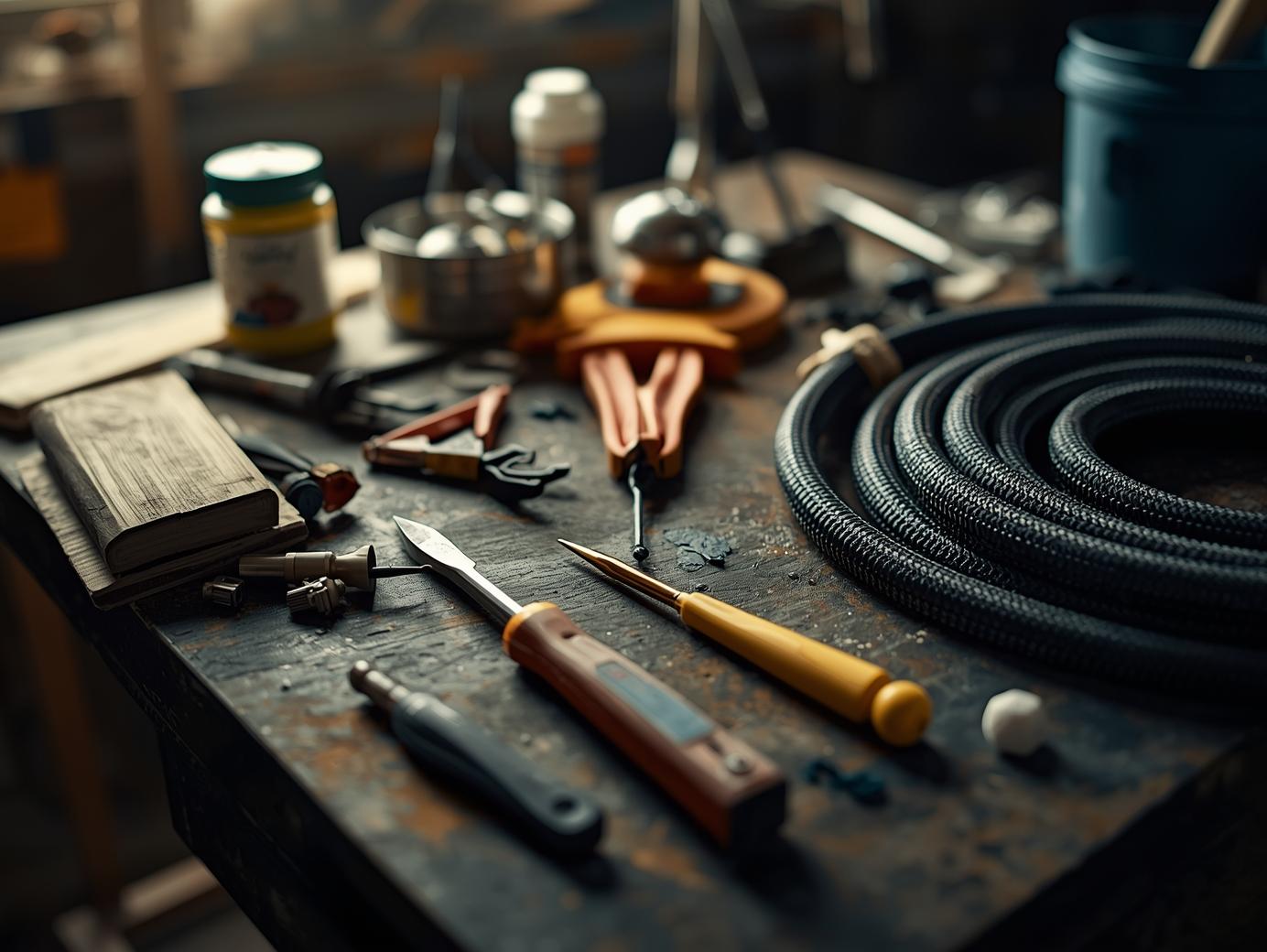
Here is everything required to build a high-quality DIY water hose.
Hose Material
Choose one:
- Standard vinyl garden hose
- Heavy-duty rubber hose
- Reinforced contractor-grade hose
- Drinking-safe hose (if you’ll use it near edible plants)
Select a diameter:
- 5/8 inch — best overall water flow
- 1/2 inch — light and flexible
- 3/4 inch — maximum water pressure
Connectors
You will need:
- Male hose fitting
- Female hose fitting
- Optional quick-connect adapters
- Stainless steel hose clamps (2 or 4 depending on your design)
Tools
- Utility knife or hose cutter
- Screwdriver
- Pliers
- Hot water (for softening hose ends)
- Tape measure
- Bucket for pressure testing
Optional
- O-rings
- Teflon tape
- Hose repair couplings
- Y-splitter or shutoff valve
Step 1: Select the Correct Hose Material
The type of hose you choose determines flexibility, durability, weight, and water volume. Understanding the differences ensures that your custom-built hose performs exactly as needed.
Rubber Hose
- Most durable
- Resists cracking in sun
- Withstands high water pressure
- Heavier to carry
- Long lifespan
Ideal for large US gardens or high-pressure systems.
Vinyl Hose
- Lightweight
- Affordable
- Easy to maneuver
- Less durable
- More likely to kink
Good for short hoses or beginners.
Reinforced Hose
- Excellent balance
- Extra braided layer inside
- Handles high PSI
- Resists punctures and kinks
Perfect for long-term use in hot climates.
Drinking-Safe Hose
Use if you water vegetables or pets directly from the hose.
Step 2: Measure and Cut the Hose to Your Desired Length
Customizing the length is the biggest advantage of building your own hose.
To get this right:
Steps:
- Lay the hose material flat in a straight line.
- Measure the exact length needed to reach your garden area.
- Add an extra 6 inches to account for connector installation.
- Use a utility knife or hose cutter to make a perfectly straight cut.
Tips:
- Avoid cutting at an angle — angled cuts cause leaks.
- If the hose is stiff, soak the area in warm water to soften it before cutting.
- Use chalk or a marker to make the cut location visible.
Clean, straight cuts ensure airtight, watertight connections later.
Step 3: Insert the Male and Female Connectors
This is the most important part of the entire build, as weak or improper connector installation leads to leaks, low pressure, or the connector blowing off under pressure.
Steps:
- Place the cut end of the hose in hot water for about 30 seconds to soften it.
- Slide a hose clamp onto the end but do not tighten it yet.
- Insert the male connector into one end of the hose.
- Push it all the way in until the hose reaches the fitting’s base.
- Slide the clamp toward the end and tighten firmly with a screwdriver.
- Repeat the process on the other side with the female connector.
Tips:
- Do not overtighten the clamp; this can slice into the hose.
- For extremely stiff hoses, use a small amount of dish soap as lubrication.
- Brass connectors last longer and maintain pressure better than plastic.
Correct installation ensures strong pressure and zero leaks.
Step 4: Secure the Hose Clamps for Leak-Free Performance
Hose clamps reinforce the connections and prevent the fittings from pulling out under water pressure.
How to tighten clamps correctly:
- Position the clamp 1/8 inch from the hose edge.
- Tighten until the clamp is snug but not crushing the hose.
- Rotate the hose slightly to ensure an even seal.
- Tug the connector to make sure it is secure.
Common Mistakes to Avoid:
- Using the wrong clamp size
- Tightening only one side of the clamp
- Placing the clamp too close to the edge
A properly clamped connector can last for years.
Step 5: Test the Hose for Leaks and Pressure Issues
Before using your new hose in the garden, you need to verify that the connections are stable under real water pressure.
Testing Steps:
- Attach the hose to your outdoor faucet.
- Place the other end in a bucket or on the ground.
- Slowly turn on the water.
- Check both ends for leaks.
- If you see dripping, tighten the clamps or reinstall the connectors.
- Test with full pressure to ensure the hose does not expand or detach.
Testing Tips:
- Do not fully open the faucet at the start.
- Watch for bulges — a sign the connector is not seated correctly.
- Replace O-rings inside connectors if water sprays from the threads.
After testing, your hose should be completely leak-free.
Step 6: Add Optional Upgrades for Better Functionality
Optional upgrades help you improve water control, durability, and versatility.
Quick-Connect System
Allows you to connect or disconnect your hose from sprinklers or faucets instantly.
Shutoff Valve at the End
Lets you turn water off directly at the hose end — helpful for raised beds.
Spray Nozzle
Choose from:
- Multi-pattern nozzles
- High-pressure nozzles
- Soft watering wands
Hose Splitter (Y-Valve)
Connects two hoses to the same faucet.
Protective Coil Spring
Prevents kinking at the connection.
Pressure Regulator
Useful if your city water pressure is extremely high.
Step 7: Maintain Your DIY Water Hose for Long-Term Use
Maintenance is simple but extremely important if you want your hose to last many years.
Tips:
- Drain the hose completely before storing.
- Do not leave it under full sun all day.
- Store indoors during winter to prevent cracking.
- Check connectors twice a year for loosening.
- Replace O-rings every 12 months.
Proper maintenance extends hose life by 3–5 years.
Conclusion
Building your own garden water hose is a simple but highly practical DIY project that gives you complete control over hose length, flow rate, materials, and durability. By following the step-by-step process in this guide, you can create a custom hose that fits your garden perfectly, eliminates leaks, and performs reliably under daily use.
This method is widely used by experienced gardeners, landscapers, and homeowners who want better performance than store-bought hoses can provide. With the right connectors, clamps, and testing, your new hose will last for years and deliver strong, consistent water flow.